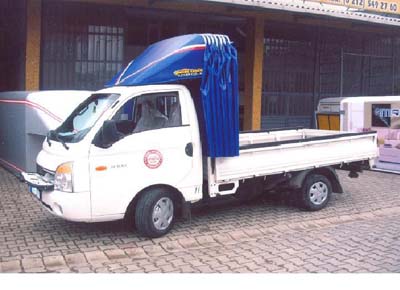
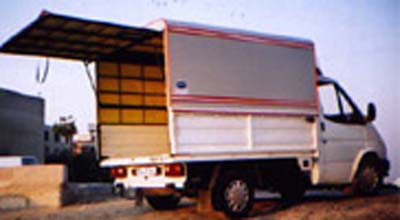
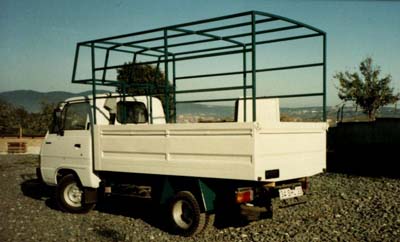
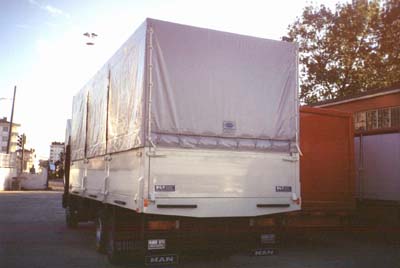
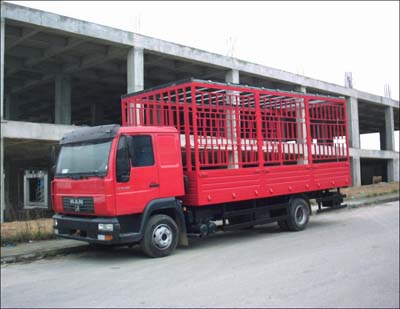
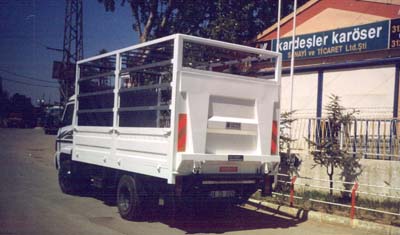
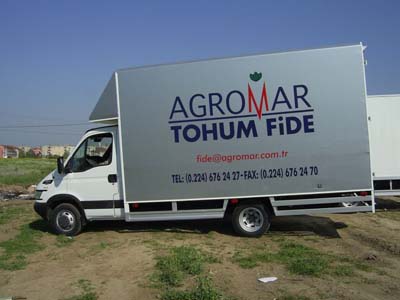
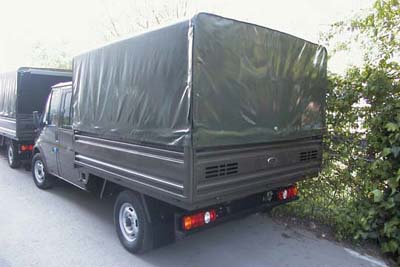
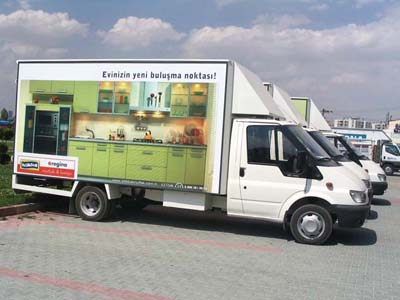
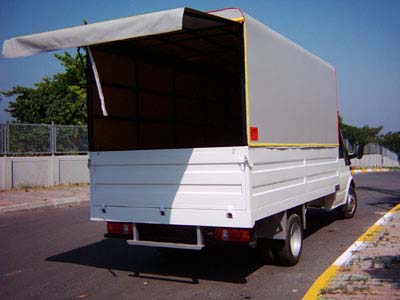
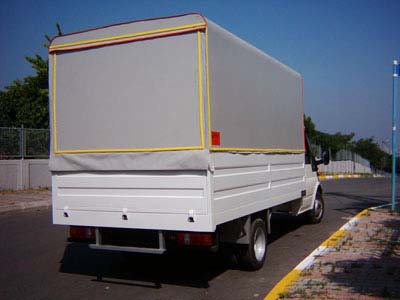
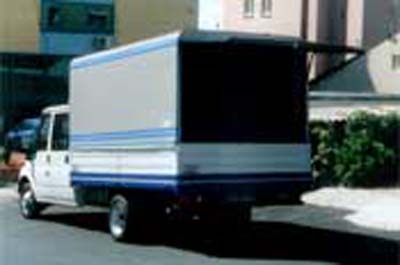
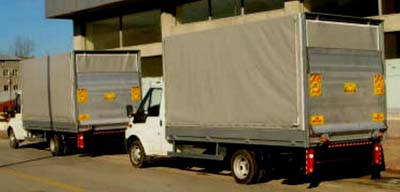
It is the oldest and most classic model used in international road transportation, standing out for its lightweight and economical nature.
Logistics-type containers are commonly used for transporting dry goods or perishable products such as beverages from factories or fields to warehouses, large markets, or vegetable and fruit markets. Our logistics-type containers come in three types depending on your loading method. In this section, we will introduce you to our fixed-roof classic tented models.
STANDARD TECHNICAL SPECIFICATIONS ;
- Base ; The base is made of steel, either NPU or “U” profile, with a suitable thickness of steel sheet, according to the size and width of the vehicle.
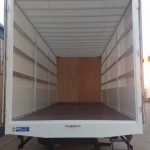
- Front Wall: The front wall frame is made of specially formed 3 mm thick steel profile. The outer wall cladding is flat panel steel supported by steel profiles. The inner lining is made of filmless plywood.
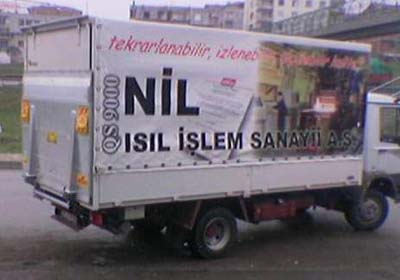
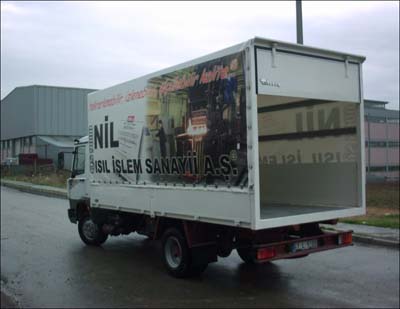
- Rear Doors: The rear door structure is made of 3 mm thick specially formed steel profile. Typically, double swing doors are applied to the rear of the body. Alternatively, a swinging strap-type curtain can also be used. Our swing doors come in two types.
|
|
- Roof ; The roof of the body is available in fixed and removable types, with a steel frame. The outer surface of the roof is covered with a 2.5 mm thick CTP polyester sheet or double-layered canvas with primer.
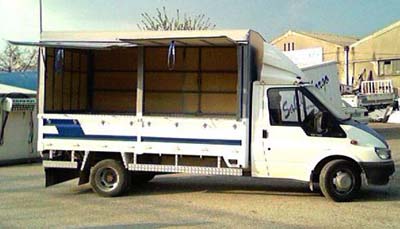
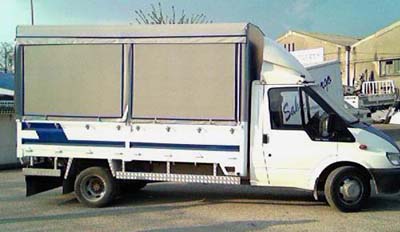
- Side Panels ; Depending on your preference, flap-type covers with a suitable height can be installed on the sides of the body. These covers are made of steel or extruded aluminum profiles. The covers have recessed type vertical locks and cast hinges.
Sliding Roller System and Stakes: This system provides convenience during side loading and unloading and also saves you time. Sliding rollers are typically used in large-sized vehicles. The sliding rollers move within galvanized steel rails mounted on the roof. They are locked with a locking system on the sliding rollers.
Between the sliding rollers, there are 3 to 5 rows of stakes (cargo holders) made of aluminum or wood. These stakes are detachable during loading and unloading.
The stakes prevent the load from leaning against the curtain. They are typically produced in standard dimensions of 25×120 mm.
Classic Curtain System; This system consists of a fixed or removable roof tarpaulin, an upward-opening side curtain, and a front wall curtain. It is produced using the hot air bonding (welding) technique. Double-layered tarpaulin reinforcement is applied at the points where the tarpaulin meets the metal on the frame to prevent wear.
It is produced with PVC-coated canvas that is resistant to temperature differences ranging from -30°C to +70°C and has a weight of 660 g/m². The canvas is woven using 1100 denier 9×9 polyester threads and manufactured by world-leading companies such as Mehler Haku or Verseidag. It has a tearing strength of 3000 N/5 cm.
Other accessories include:
- Curtain tarpaulin: 670 grams, woven with a 9×9 pattern, 1100 dtex, imported Panama tarpaulin.
- Lining tarpaulin.
- Adhesive columns.
- Reinforced tarpaulin.
- Caps and bridges.
- Rings, buckles, and straps.
- Customs rope.
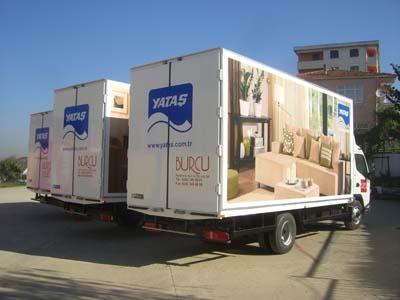
Digital curtain printing: High-quality digital printing is applied to the tarpaulin using 3M Ink 720 Dpi 12 pass Vutek technology, followed by a liquid lamination with a seal thickness of 16-32 microns.