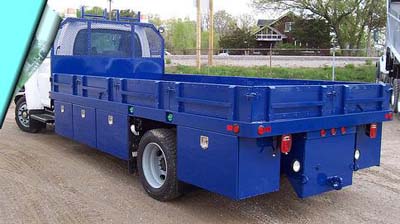
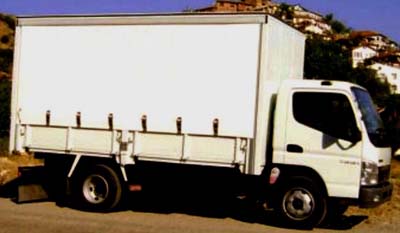
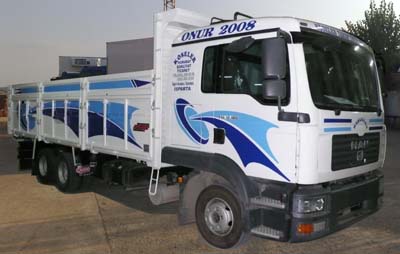
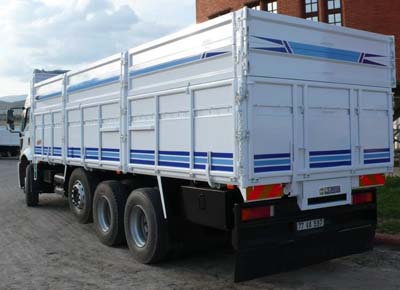
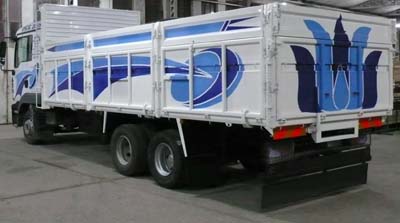
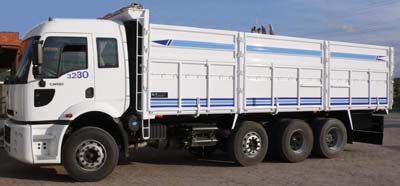
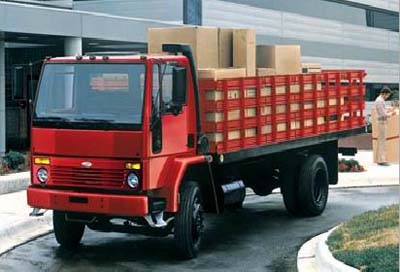
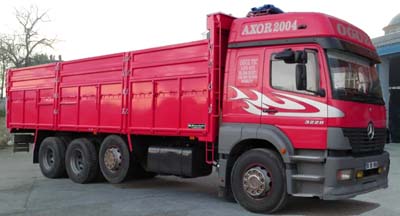
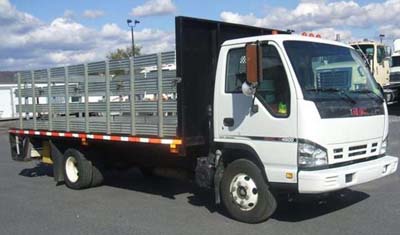
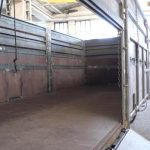
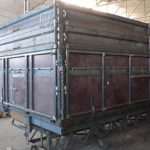
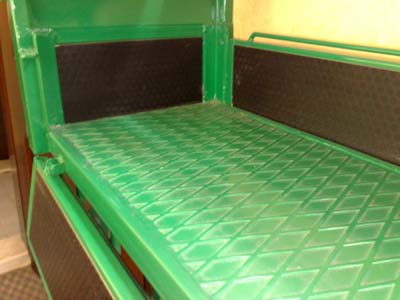
These types are designed to carry various loads, especially fresh fruits and vegetables. You can transport your products quickly and easily with these crates. They are very lightweight, which reduces the overall tonnage carried by your vehicle.
As a result, your fuel consumption decreases and the lifespan of your vehicle increases. Open-type crates provide you with practical transportation options.
Base;
The chassis and pads of our crates are made of steel with suitable thickness in “rectangular profile” or “U” shape. The base flooring is covered with either plain black sheet metal or phenolic film-coated imported water-resistant plywood. In our crates designed for heavy-duty load transportation in large trucks, we use 80 or 100 NPU or NPI steel profiles for the pads.

Front;
The corners and bottom of the front wall, as well as the side and rear skirts, mudguards, and removable stakes, are made of 3 mm thick steel sheet.
The front wall features specially formed profiles and frames made of 3 mm steel sheet. It is covered with plywood, 9 mm thick for vans and 15 mm thick for trucks, depending on the vehicle type.
Vans have a console on the front wall, made of steel profiles measuring 40x60x3 mm and 40x40x2 mm.
In larger vehicles such as trucks, there is no console on top of the front wall. The front wall has a luggage compartment for storing tarps, ropes, etc. There is a fixed ladder at the front of the body for accessing the luggage compartment.
Side and rear doors;
The side and rear doors have specially formed profiles and frames made of 3 mm steel sheet. The doors are covered with plywood, 9 mm thick for vans and 15 mm thick for trucks, depending on the vehicle type.
The door height ranges from 400 to 1100 mm. The doors are equipped with dump-type steel hinges or TIR-type cast hinges. The door locks are either cam chain locks or recessed vertical locks.
Painting;
The underside and skirts of the body are completely coated with AKZO KEMİPOL tar. Areas requiring putty are filled with putty. Silicone coating is applied to the joints. Other surfaces are primed with epoxy-based primer in thin layers, and then the entire interior and exterior surfaces are painted with 2 coats of AKZO SYNTHETIC automotive paint in the vehicle color